
Hoof Xtra Mineral Mix could help horses & ponies prone to laminitis
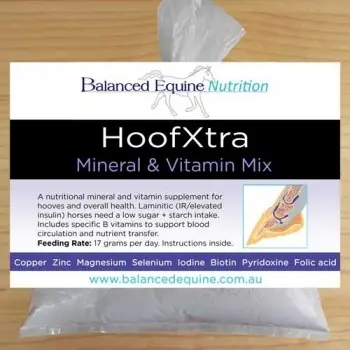
 Developed by Carol Layton from Balanced Equine, the Hoof Xtra Mineral mix came about after horse owners requested a mix which offers the nutrients that benefit horses who are either laminitic prone or diagnosed as insulin resistant (IR), also known as Equine Metabolic Syndrome (EMS) or chronic laminitis.
What is Insulin Resistance (IR)?
This is similar to Type II diabetes in people but unlike people, horses rarely have high glucose except in very severe cases.
Since both sugar and starch cause insulin to rise, the aim is to eliminate all high sugar and starch feed.
The target is to have sugar and starch no greater than 10% in the overall diet and for each feed ingredient.
Avoid high-fat feeds as high fat intake is considered a risk factor for laminitis.
The most common cause of dietary laminitis (including pasture laminitis) is insulin resistance (IR).
IR is a condition where the body’s cells don’t respond to insulin signalling. As a result, the pancreas produces more insulin than normal.
The solution is an excellent quality, low sugar and starch grass hay diet to replace the grass component of the diet.
Since IR is on a spectrum, severe IR horses can’t tolerate a blade of grass, but others that are more mildly IR can tolerate a grass intake if carefully managed.
- Exercise or movement is vital as it can make a horse less IR.
- Horses that are overweight can be more IR.
- A grazing muzzle may also be required for some.
How will Hoof Xtra help?
Unlike many other mineral mixes, there is NO added iron and manganese which are harmful in excess and compete with the uptake of zinc and copper.
Pasture and hay tests around Australia have shown that iron and manganese are often excessive, particularly iron.
There is no excretory pathway for excessive iron, and excessive manganese is an issue because it takes up storage space that is normally for iron.
The following breakdown of minerals in HoofXtra will give you info on how each mineral supports the IR or laminitic equine.
Copper: Involved in enzymes in rapidly dividing cells including the process that holds keratin strands together for hair and hooves.
Zinc: Essential for interactions between proteins and a variety of enzymes. Zinc is a key component of ‘zinc finger proteins’ in the assembly of keratin, a hoof building material. A zinc deficiency can be expressed as slow hoof growth, thin walls and weak connections and horn.
Magnesium: The symptoms of inadequate magnesium are the same as those of excessive ionised calcium.
These include irritability, hypersensitivity, muscular symptoms from twitching to spasm, with a potential for GI symptoms and heart irregularity when severe.
Adequate magnesium is critical to both the burning of fuels and storage of energy in every cell. Magnesium is involved in both the metabolism of glucose and insulin sensitivity.
Selenium: Selenium is an important antioxidant for protecting cell structures and cell membranes from the effects of oxygen-free radicals. It is most important for tissues with high aerobic metabolism like the brain/nervous system, heart, skeletal muscles and rapidly growing tissues.
Acidic to neutral soils can inhibit selenium uptake by plants. Alkaline soils are more likely to have adequate selenium levels though horses in work may need supplementation. A soil test will test pH, the lower the pH number the higher the acidity, 7 is neutral and the higher the number the more alkaline the soil.

Excessive tissue levels of selenium are toxic. Care should be taken to avoid over-supplementation from this product and/or concurrent use of other products containing selenium (such as pasture topdressing, pellets, drenches or a vaccine containing selenium).
If blood selenium levels are high this product should not be used. Users can determine an animal’s selenium status by consulting their veterinarian.
Biotin: Vitamin B7 has been shown to have a beneficial effect on insulin signalling by moving glucose from the bloodstream into cells without raising insulin levels. The horse becomes more insulin sensitive rather than resistant.
Pyridoxine and folic acid: These two vitamins play a key role in in the synthesis of nitric oxide. Nitric oxide is a simple gas important in insulin signalling and blood flow.
Do not supplement sulfur or garlic. Vitamin E can be supplemented with human capsules. Vitamin E added to feeds or multi-ingredient supplements is oxidised very quickly so should be added separately. If In powder form, should be soaked in oil for optimal uptake. Click here for More info on Vitamin E.
If HoofXtra doesn’t help (poor coat appearance, compromised immune system, poor hoof quality), then the pasture/hay should be tested to see what the mineral levels and copper to zinc ratio is.
This will tell us what amounts of copper and zinc are needed to optimise the rest of the intake (and the other nutrients like protein, calcium, phosphorus and magnesium).
Excellent information to help IR equines can be found at www.ecirhorse.org and their Yahoo group.