
A CURE FOR SEEDY TOE
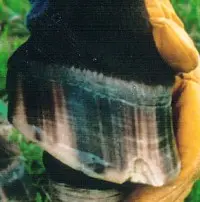

Seedy toe seems to be one of the most common afflictions to a horse’s hooves and can best be described as a fungal infection which enters through the white line where it has been weakened either by excess hoof growth, horseshoe nails or sub-clinical laminitis.
It gets its name from most commonly being found in the toe area, although it can affect any other part of the hoof wall.
Where the integrity of the white line has been weakened (stretched or punctured) the fungi and bacteria enter from the soil much like hoof rot in sheep and eat their way up the inside of the hoof wall, thriving on the dark, damp conditions.
What can first look like a small area of rot once dug into with a hoof knife can reveal a large amount of damage, which in severe cases can cause chronic lameness.
As the primary infection is usually fungal, it means that it does need consistent treatment to return the hoof to good health.

First, if you trim your own horse’s hooves, you need to remove as much of the damaged (crumbly) hoof wall as possible to open the infected area to the light and air and to stop dirt being packed into it.
If you aren’t confident about doing this, ask a hoof care specialist to show you how far to trim and be careful to only remove hoof wall, not sole or the sensitive laminae inside the white line.
Next, it’s a matter of using an anti-microbial agent to soak the hoof in once or twice a week. Milton nappy wash or the generic equivalent (Black & Gold or Home Brand) which have the same chemical component and concentration as Milton, are ideal at a ratio of 1:10 (9 parts water). I mix up a 2 litre bottle using 200ml of Milton and the rest lukewarm water.
Many bleaches use the same chemical (sodium hyper chlorate) but at different concentrations. It is probably easier to use the “Milton” than to work out the right does rates for the bleaches.
Using a hoof soaking boot or if you’re on a budget, a section of inner tube folded in half once the hoof is inside and tied around the pastern is just as effective.
After cleaning the infected area thoroughly with a wire brush and even a sharp knife or nail to get all the dirt out, put the hoof boot on and pour in enough solution to fill it to mid pastern level.

After 10 minutes, empty the boot and add fresh solution. Do this again twice more after 10 minutes so there is a total soaking time of 30 minutes.
While the hoof is nice and clean, spray the infected area with a solution of 1:10 Vetadine (9 parts water) that you have mixed in a spray bottle (Vetadine is an economical form of tamed iodine (betadine) that you can buy as an animal wash from your vet or produce store… again it is the easy way to get the dosage right as “iodine” may come in a large range of concentrations and straight iodine mixed 1:10 is quite destructive).
You can spray the Vetadine in twice daily if it’s a serious infection, otherwise, do it as often as possible between soaking.
This method has been used with great success by Peter Laidely of Hooworks Australia. He says people who use other products such as pure Formalin or Copper sulphate, risk poisoning their horse as the area where the bacteria reach is alive and can absorb these chemicals into the blood stream.
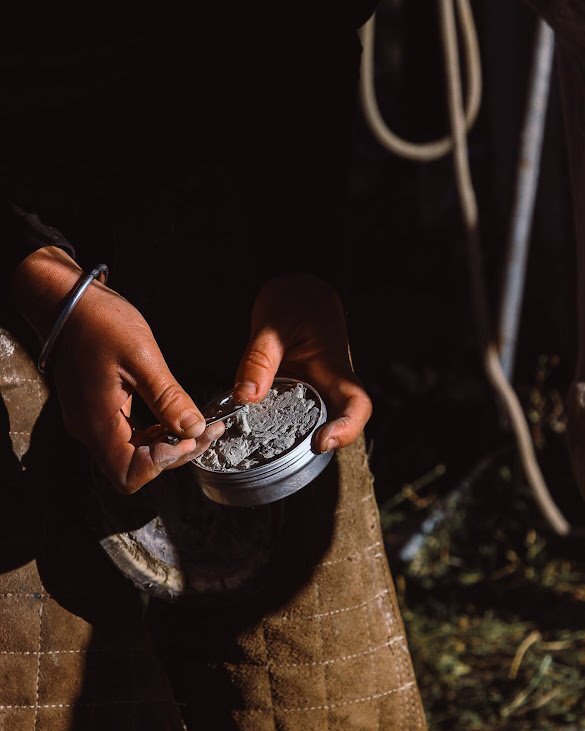 The safest option is to pack the hole after treatment with a product like Equifibre or Beeswax Blue Balls to allow healing and stop more bacteria entering.
Of course, once you have the seedy toe under control, the hoof wall will grow out and if you keep the hoof correctly and frequently trimmed, it will not occur providing you feed a properly mineralized diet. Read more about How Minerals Affect Horses Hooves here.
For more information on keeping your horse barefoot, or learning how to trim, Peter has a wonderful book on CD which is available from our online store.